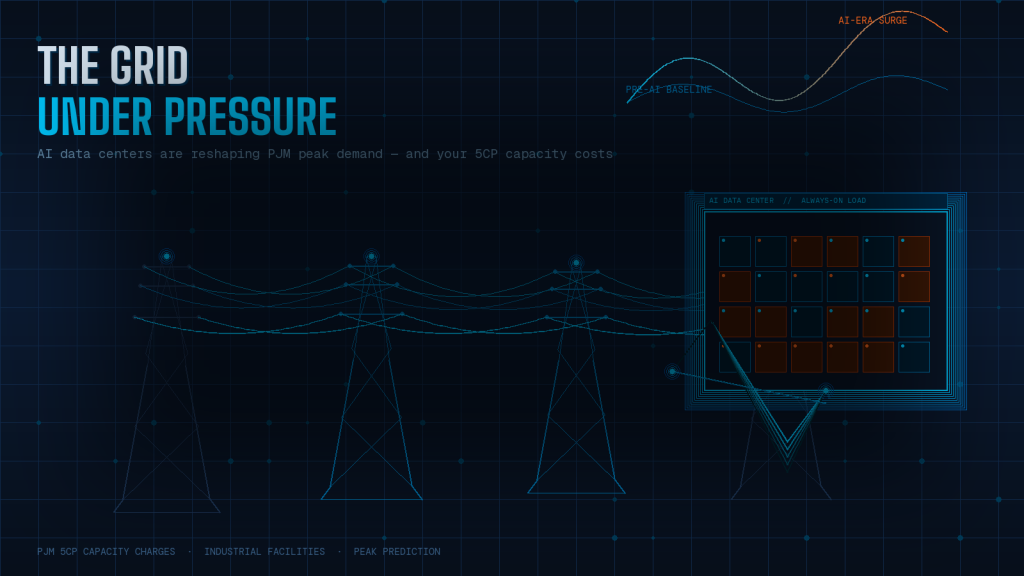
There’s a quiet crisis unfolding on the electric grid, and if you run an industrial facility in PJM territory, you’re already feeling it in your electricity bills — even if you’re not entirely sure why.
A recent piece out of Carnegie Mellon University laid it out pretty plainly: the explosion of AI-driven data centers is pushing Pennsylvania’s aging electrical infrastructure to its limits. Substations designed for slower, more predictable growth are being asked to handle loads they were never built for. Transmission lines that have been in place for decades are straining under demand that’s doubling faster than utilities can plan around it. And here’s the thing — when the grid buckles under that pressure, it’s not just data centers that feel it. It’s every industrial customer on the same system.
What’s Actually Happening to the Grid
AI-focused data centers are a different beast than the server farms of 10 years ago. A traditional data center can throttle back during off-peak hours, let hardware idle, manage its load. An AI facility running inference workloads or training large models doesn’t really do that. It runs flat out, around the clock, drawing power like a small city — because essentially, it is one. A single modern AI data center can consume as much electricity as tens of thousands of homes combined.
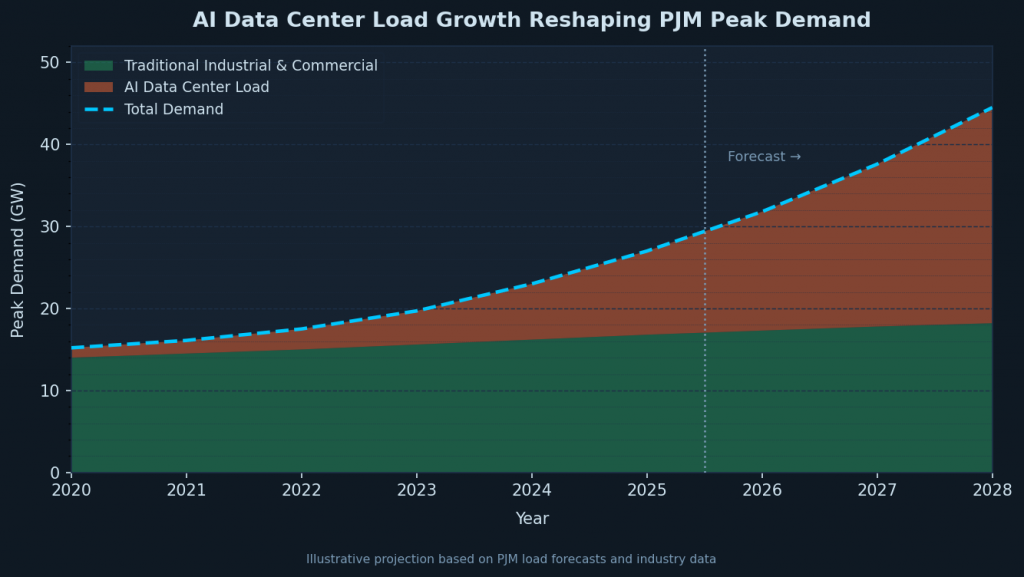
The Pittsburgh region and broader PJM footprint have become a magnet for these facilities. Repurposed industrial land, fiber infrastructure, proximity to talent — it checks a lot of boxes for developers. But utilities typically plan new generation and transmission capacity on a multi-year timeline. Data center developers want power connections in months. That mismatch is creating real stress on the local grid, and in some cases utilities have had to delay or reject interconnection requests entirely because they simply can’t guarantee reliable service without major infrastructure overhauls.
The cost of those overhauls doesn’t disappear. It gets spread across ratepayers — including every industrial customer in the region. PPL Corp., one of Pennsylvania’s major utilities, recently noted that average monthly electricity bills in the state have jumped roughly $68 over the past five years, with most of that increase tied to generation supply shortfalls, some of which are being driven directly by data center demand growth and the retirement of older coal plants.
The 5CP Problem Just Got a Lot Worse
If you’re an industrial energy manager, you know what 5CP is. For everyone else: PJM — the grid operator covering Pennsylvania and a dozen other states — uses a mechanism called the Five Coincident Peaks to set capacity charges for large customers. The idea is straightforward. PJM identifies the five highest demand hours across the entire grid during the summer. Whatever percentage of grid demand your facility is consuming during those five specific hours determines your capacity tag — essentially, your share of the cost to keep the lights on for everyone.
Capacity charges aren’t a small line item. For many industrial facilities, they represent 20–40% of total electricity costs, sometimes more. And here’s the rub: as AI data centers push overall grid demand higher and create sharper, more unpredictable peak events, those 5CP hours are getting harder to anticipate and more expensive when they hit.
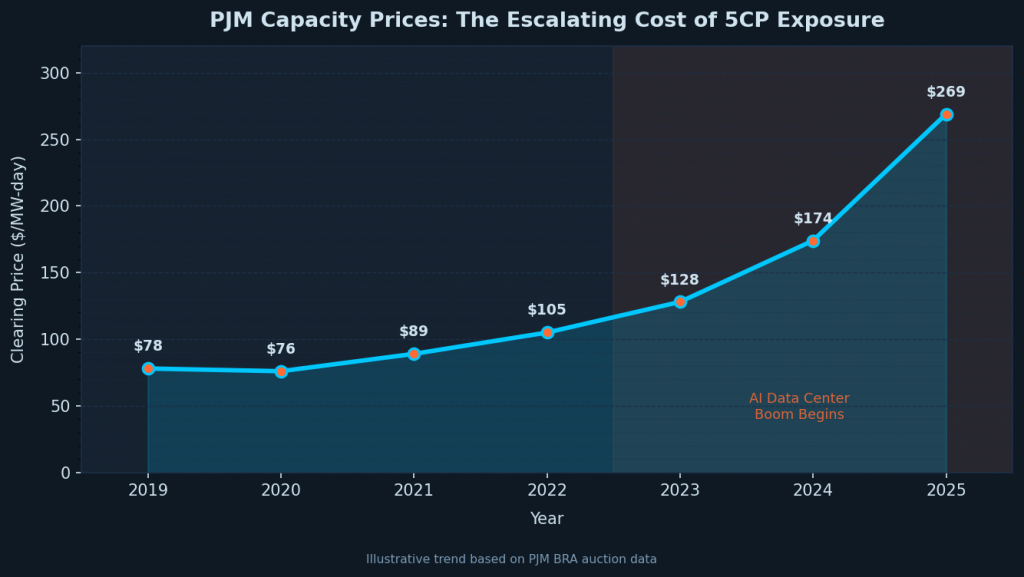
Think about what that means practically. You used to be able to make reasonable guesses about when PJM peaks would occur — typically hot, humid summer afternoons when air conditioning load is maxed out across the region. The patterns were relatively stable. But add tens of thousands of megawatts of new, always-on AI compute to the mix, and the baseline demand floor rises. The peaks get higher. And because data center load doesn’t respond to temperature the way AC load does, the relationship between weather and peak hours is changing in ways that make historical models less reliable.
The result? Industrial facilities that were once reasonably good at curtailing during peaks are missing more of them. Their capacity tags are going up. Their bills are going up. And many of them don’t have a clear explanation for why, or a reliable way to do anything about it.
The Answer Isn’t Just Curtailment — It’s Prediction
Here’s where a lot of facilities go wrong. They know about 5CP. They have some kind of curtailment protocol in place. They might even get alerts from their utility or energy broker. But the actual decision-making process — when to pull back operations, how much, for how long — is still largely reactive and gut-feel based.
That’s a problem when the stakes are this high and the signals are this noisy.
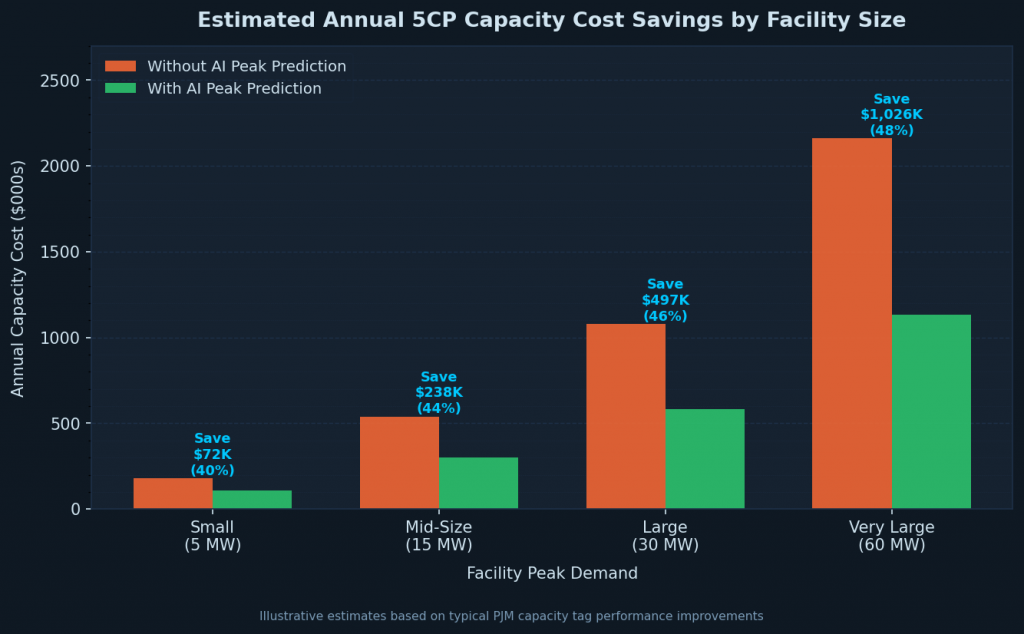
AI peak prediction software flips that dynamic. Instead of waiting for a peak to be confirmed and scrambling to respond, these platforms analyze real-time and forecast data — grid load, weather patterns, historical peak behavior, current demand trends — and give facility operators advance warning, often 24 to 48 hours out, with probability scores attached. The best platforms are continuously updating those predictions as conditions change, so you’re not locked into a curtailment decision made on stale data.
The practical impact is significant. Facilities that implement AI-driven peak prediction typically see their capacity tag performance improve materially within the first year. Instead of catching two or three out of five peaks, they’re catching four or five. That difference can translate to hundreds of thousands of dollars annually for a mid-sized industrial operation — sometimes more for larger facilities with higher demand charges.
Beyond the direct cost savings, there’s an operational benefit that doesn’t always get talked about. When curtailment decisions are made more confidently and with better timing, facilities can be smarter about how they curtail — sequencing load reductions in ways that minimize production impact rather than just yanking power from whatever’s easiest to shut off. That matters for facilities where downtime has real costs attached to it.
The Bigger Picture
What’s happening in Pennsylvania is a preview of what’s coming everywhere in PJM and beyond. The grid is being fundamentally reshaped by AI infrastructure demand, and the cost allocation questions are still being worked out by regulators and utilities. Some states are experimenting with requiring data center developers to pay more upfront for infrastructure. Others are exploring special tariffs. None of those policy debates are moving at the speed of the actual problem.
In the meantime, industrial facilities are exposed. The capacity cost mechanism isn’t going to change, and if anything the pressure on 5CP performance is going to increase as more AI compute comes online and pushes peak hours higher and less predictable.
The facilities that will weather this best are the ones that stop treating peak prediction as an afterthought and start treating it as a core part of energy management. The tools are there. The data is there. The only question is whether you’re going to use them before the next capacity tag season hits — or after.
If you’re an energy manager at an industrial facility in PJM territory and want to understand how AI peak prediction software could impact your capacity costs, it’s worth having a conversation before summer. The peaks don’t wait.