Understanding the Role of Backup Power in the Grid
Imagine your facility stops producing for a couple of hours; is that something that you can tolerate? When you are working in the office and suddenly the HVAC, the lights, and most importantly the internet stop working, how would you feel? Even a few minutes with no electricity can reduce your overall revenue and productivity. This is why it is so incredibly important to have a reliable supply of electricity. These electric demands must be met, not only under normal conditions but also during unexpected events. This is where Operating Reserve (OR) serves its purpose.
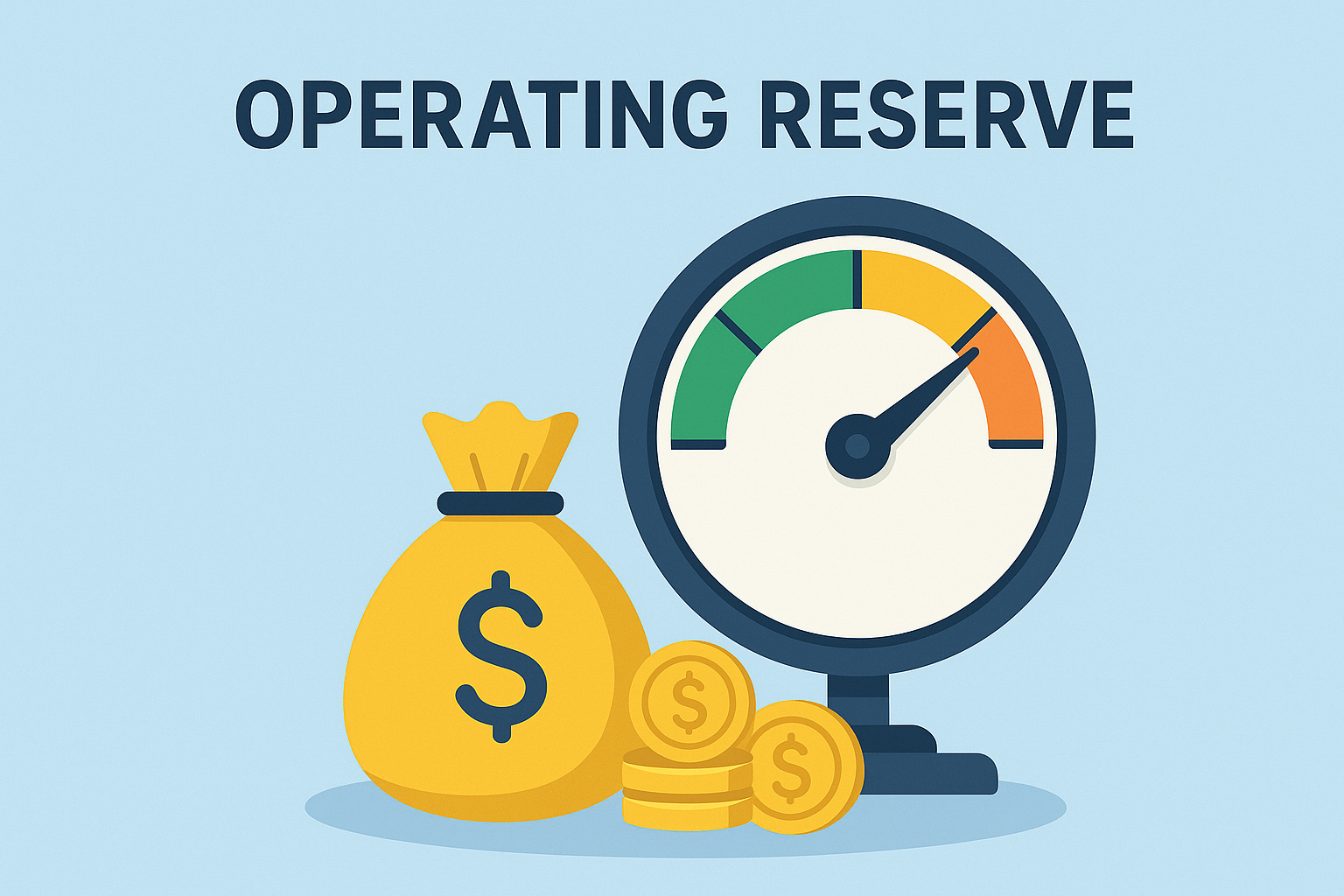
Operating reserve refers to the extra generating capacity or load reduction that can be called upon at short notice. This is required for when an unexpected event happens and the grid needs a little bit of extra power to maintain balance and stability in the grid. This system in Ontario is managed by the Independent Electricity System Operator (IESO) and is used to prevent blackouts by maintaining a stable flow of electricity to businesses and homes.
Why Operating Reserve Matters
The electricity grid operates on a delicate balance: supply must always match demand in real time. Even small mismatches can cause voltage and frequency fluctuations, which can damage equipment and destabilize the system.
Operating reserve is critical for:
- Grid Reliability: Ensures electricity is available even if a power plant trips offline or demand exceeds forecasts.
- Emergency Response: Acts as a rapid backup to avoid blackouts.
- Market Stability: Gives operators the flexibility to manage unexpected changes without triggering price spikes.
The Three Classes of Operating Reserve
Ontario’s IESO has three main classes of operating reserve, each with a specific response time:
- 10-Minute Synchronized (Spinning) Reserve — already online and synchronized to the grid; can generate power instantly and must be activated within 10 minutes.
- 10-Minute Non-Synchronized (Non-Spinning) Reserve — not currently generating but can be started and brought online within 10 minutes.
- 30-Minute Reserve (Non-Synchronized) — not generating at the time of commitment; must be activated within 30 minutes and provides an additional backup layer for less urgent needs.
To participate, generators or loads must:
- Provide the required energy within the specified timeframe.
- Sustain the supply or reduction for up to one hour.
- Offer an equal or greater amount of energy into the real-time market.
Participants can offer into one or multiple classes, and importantly, they receive standby payments even if their offer is selected but not activated—meaning you get paid just to be ready.

Participation and Payment Incentives
The financial benefits of participating in OR can be substantial. On average, participants can earn about $40,000 per MW of capacity offered annually.
Whether you’re looking to join the 10-minute synchronized, 10-minute non-synchronized, or 30-minute non-synchronized reserve classes, Edgecom Energy can help you identify your best opportunities, quantify your available capacity, and maximize your returns.
Revenue Stacking: Combining OR with ICI and DR
For large industrial customers, such as Ontario’s Class A consumers, participating in operating reserve programs isn’t just about grid reliability—it’s also a powerful income stream. By combining OR with the Industrial Conservation Initiative (ICI) and Demand Response (DR), facilities can unlock significant annual earnings.
This is an example of how much you can earn if you are a Class A customer with 5 MW load reduction capability:
- ICI Savings – $1,750,000 ($350,000 per MW) from avoiding Global Adjustment charges.
- Demand Response – $375,000 ($75,000 per MW) from participation in the IESO DR Auction.
- Operating Reserve – $200,000, participating in OR
That’s a potential $2,325,000 per year, all while improving grid stability and sustainability.
How Edgecom Energy Supports OR Participation
Participating in the Operating Reserve market is most effective when you can respond quickly, strategically, and with minimal impact on operations. NeuraCharge™, Edgecom Energy’s AI-powered energy management platform, is designed to do exactly that.
By leveraging real-time IoT monitoring, advanced forecasting, and automatic control, NeuraCharge™ is able to determine when and how your facility should shed load for optimal savings. It looks at your energy profile and signals from the market to make sure you commit capacity when and as required and pays you for it.
Curtailment strategies powered by NeuraCharge™ include:
- Dimming or turning off non-critical lighting without compromising production quality.
- Shifting production schedules to avoid curtailing during critical processes.
- Pre-cooling or pre-heating buildings so HVAC load can be reduced during an OR event.
- Dispatching Battery Energy Storage Systems (BESS) to provide reserve capacity without disrupting operations.
- Automating NG or diesel generator dispatch to meet OR commitments instantly.
With NeuraCharge™, facilities can seamlessly integrate these strategies, participate in multiple reserve classes, and stack OR earnings alongside ICI and DR incentives—all while reducing costs, improving reliability, and lowering emissions.
Operating Reserve vs. Capacity
It’s important to distinguish between capacity and operating reserve. Capacity refers to the total amount of generation a power system can produce under normal conditions, while operating reserve is the portion of that capacity kept in reserve for emergencies. A power plant may contribute to capacity but not to operating reserve if it’s already running at full output.
The Future of Operating Reserves
Renewable generation like wind and solar power is pushing more and more “operating reserves” onto the grid. The variability and weather-dependent nature of this renewable generation can nicely match the demand for flexible, fast-responding reserves. Behind-the-meter battery storage technology, AI-guided forecasts, and demand-side management is now the bedrock of keeping enough reserves in place without relying too much on fossil fuels.
Instead, we will have a more distributed operating reserve solution consisting not only of large power plants but also those smaller, flexible resources like electric vehicle fleets, smart appliances, and microgrids.
Conclusion
Operating reserve is the unsung hero of the power system—the backup power that ensures our lights stay on even when the unexpected happens. Whether it’s a sudden surge in demand, a plant outage, or a transmission issue, OR keeps the grid stable and resilient.