The Future of Ontario’s Global Adjustment: Rising or Falling? Edgecom Energy Explains
Every large energy user in Ontario is familiar with a famous line item on your bills – the infamous “Global Adjustment”. What is this cost? Why does it fluctuate so much monthly, and what are its drivers behind it? Is it going to go away, or is it here to stay? Keep reading to learn the answers to these questions and more.
In Ontario, the electricity system is a finely tuned operation that ensures power is always available when and where needed. But there’s a lot that happens behind the scenes to maintain a reliable and affordable electricity supply. One tactic involves adding line item charges to electricity bills that reflect the costs of keeping Ontario’s energy system up and running, which is the Global Adjustment (GA) charge. GA charges are funneled into investments in new generation, conservation programs, and contracted supply. For large energy users in Ontario, particularly Class A Facilities, understanding the trends in GA can offer valuable insights into the health of the electricity system and how costs might evolve in the future.
A Positive Trend in Global Adjustment Receivables
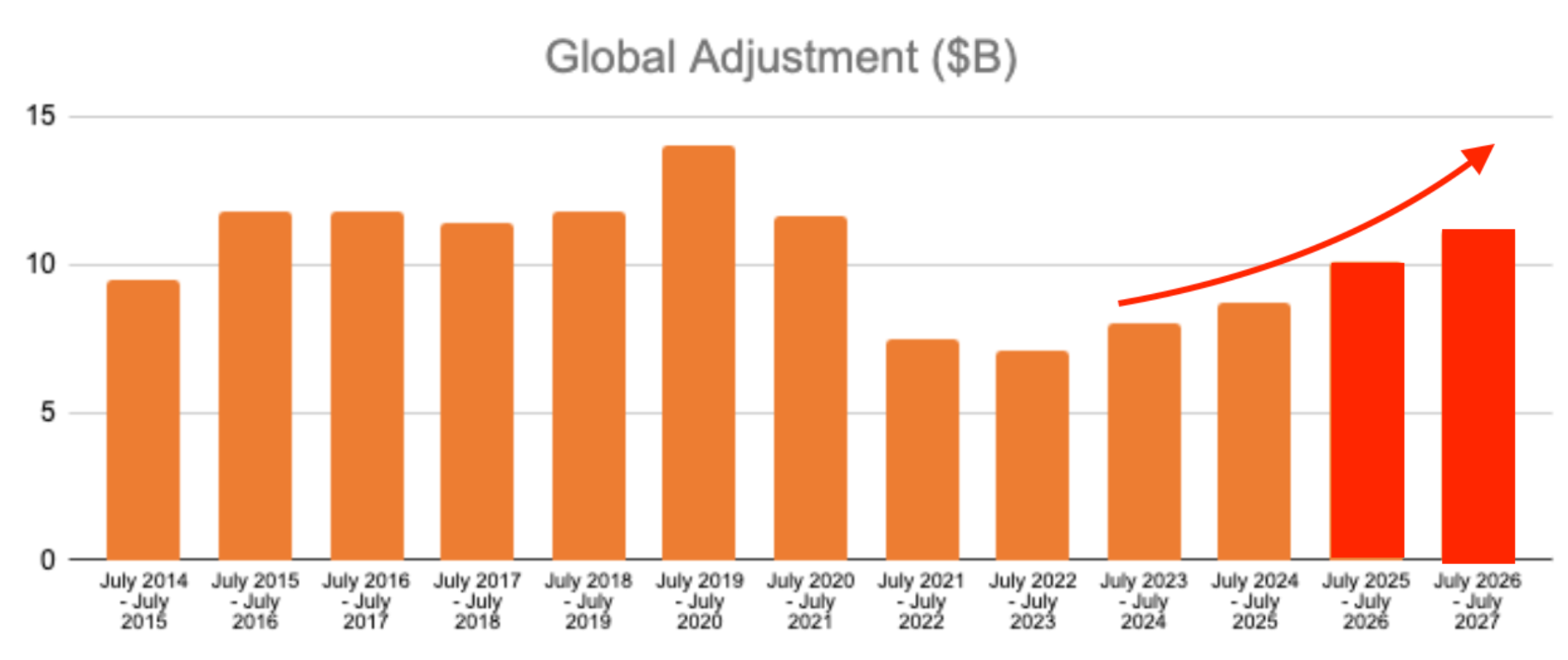
From 2023 to 2024, GA fell by over $8 billion. This was the lowest point GA had reached in years, settling at $8.00679B. What does this signify? The significance of this is that there has been an effective approach in managing the costs associated with Global Adjustment.
The Effect of Rising Demand on Global Adjustment
While there has been a positive trend in managing Global Adjustment receivables across Ontario, electricity demand is still rising. This increase in demand impacts the value of each unit of electricity (measured in MW), which is reflected in the price per unit, known as the PDF (Price Determining Factor).
Ontario’s top 5 peak demand values from May 2024 to May 2025 show a noticeable uptick in total demand. Here’s a breakdown of the top demand values in MW
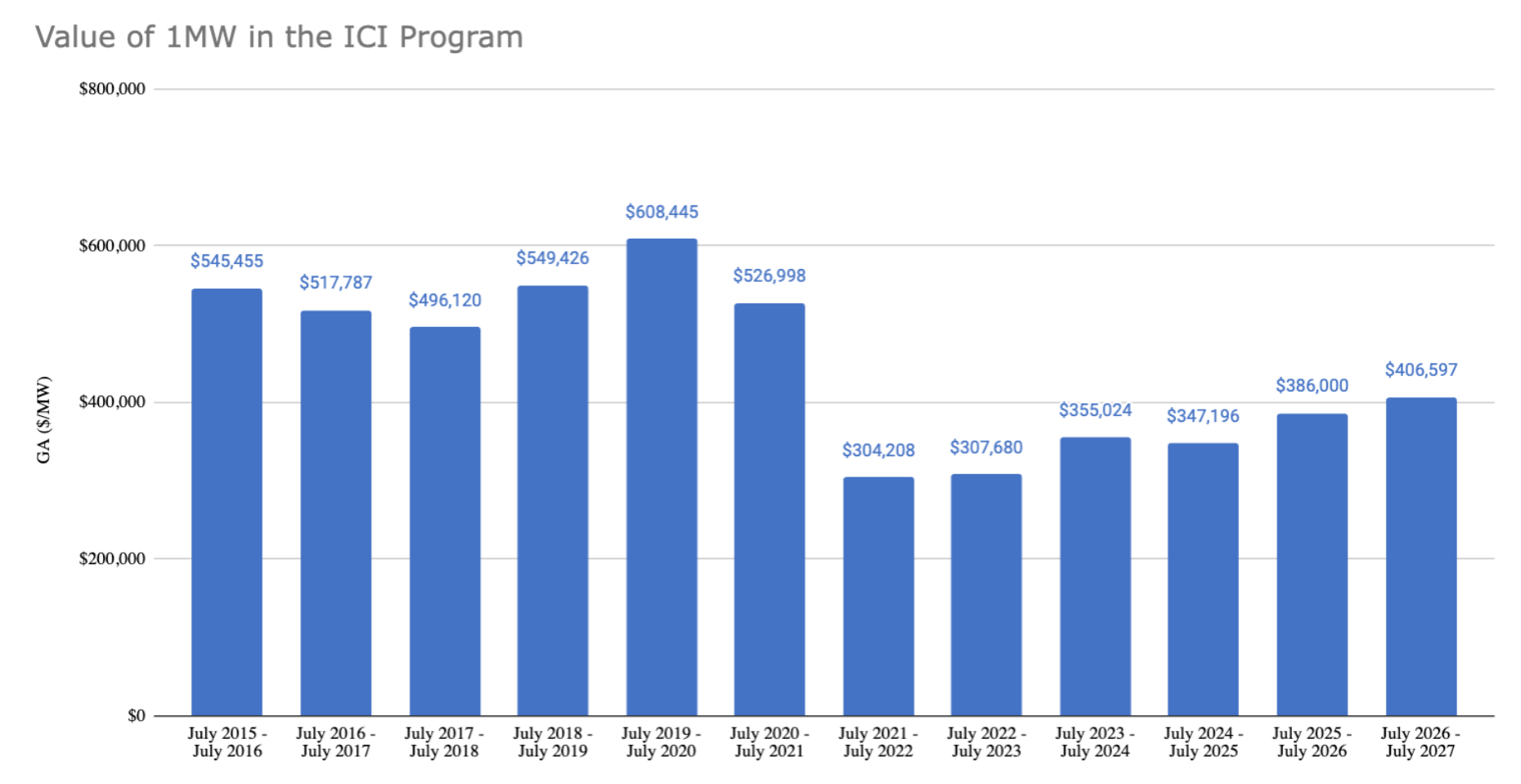
Comparing the data for May 2024 to May 2025, the total demand increased from 116,590 MW to 122,972 MW. This increase in total demand decreases the PDF value, meaning that 1 MW in 2025 is valued at less than 1 MW in 2024, with a projected value of $405,000/MW. Although the PDF denominator has increased to approximately 122,000, the total GA cost pool is projected to increase.
This shift in demand dynamics highlights an essential point for Class A customers. While demand grows, the cost per unit of electricity may not escalate at the same rate, as the system works to manage and mitigate the increase in demand.
Key Initiatives Influencing Global Adjustment & Driving Down Costs
The IESO has several programs that help reduce the overall costs embedded in the GA charge. The ultimate goal is cost containment and energy efficiency, which is necessary for future affordable energy for its residents, businesses, and communities.
1. Industrial Conservation Initiative (ICI)
Large industrial customers (Class A) can significantly lower their electricity costs through the ICI program by curtailing consumption during peak demand periods. By reducing energy use during these critical moments, businesses can lower their GA charges. Projections show substantial growth in savings from ICI, with the ability to reduce summer peak demand from 2,013 MW in 2026 to 2,518 MW in 2050.
2. Demand-Side Management (DSM) & Energy Efficiency
Energy efficiency programs are among the most cost-effective ways to reduce electricity demand, ultimately driving down consumer costs. Key initiatives include:
- 12-Year eDSM Framework (2025-2036): With a budget of up to $10.9 billion, this framework aims to meet provincial, regional, and local needs cost-effectively. The IESO targets 4,636 GWh of energy savings and 900 MW of peak demand savings for the 2025-2027 period.
- Peak Perks Program: Launched in 2023 under the “Save on Energy” brand, this program offers financial incentives to residential customers who reduce their air conditioning use during summer demand peaks. By the end of 2023, nearly 100,000 devices were registered, with the program projected to expand to 200,000 devices by the end of 2024. This initiative is set to become Canada’s largest virtual power plant and is expected to expand further to include small businesses.
3. Modernizing the Energy Market & Strategic Procurements
The IESO continuously works towards modernizing Ontario’s electricity market. They aim to promote competition to ensure the ongoing affordability and reliability of the energy supply. This includes initiatives such as the Market Renewal Program (MRP), the Long-Term 1 (LT1) RFP, and the Expedited Long-Term (E-LT1) RFP.
- The Market Renewal Program (MRP), launched in May 2025, aims to modernize market platforms for more efficient use of diverse resources. This will send more accurate price signals, leading to new opportunities such as virtual trading and day-ahead arbitrage.
- The Long-Term 1 (LT1) RFP and Expedited Long-Term (E-LT1) RFP have successfully secured large-scale energy storage resources, including Canada’s largest procurement of storage resources to date (1,784 MW). These efforts contribute to more stable pricing and cost containment.
Edgecom Energy is a leading innovator dedicated to helping customers lower energy costs and enhance sustainability. Through its comprehensive energy management platform featuring real-time energy and asset monitoring, AI-driven peak demand predictions, and demand response participation, Edgecom empowers businesses to take control of their energy usage and outsmart rising costs. Contact Us today to learn more.