

Taking Advantage of Ontario’s Market Renewal Program (MRP) and Its Electricity Pricing Benefits
With the implementation of Ontario’s Market Renewal Program (MRP), electricity consumers now have three participation options:
- Non-Dispatchable Loads (NDLs)
- Price-Responsive Loads (PRLs)
- Dispatchable Loads (DLs)
Non-Dispatchable Loads simply pay the Ontario Zonal Price (OZP), which represents an average provincial rate. Price-Responsive Loads (PRLs) and Dispatchable Loads (DLs), however, actively participate in the Market Renewal Program through the Day-Ahead (DA) and Real-Time (RT) markets. The key difference is that Price-Responsive Loads can consume energy in real time. At the same time, Dispatchable Loads receive dispatch instructions from the Independent Electricity System Operator (IESO) and must comply with them.
How the Market Renewal Program Creates New Opportunities
The Market Renewal Program introduces two new opportunities for managing electricity costs.
- Taking advantage of lower Day-Ahead (DA) prices compared to the Ontario Zonal Price (OZP).
- Arbitraging between Day-Ahead (DA) and Real-Time (RT) prices.
Take Advantage of Lower Day-Ahead Prices under the Market Renewal Program
Since the OZP is the weighted average of DA prices across Ontario, specific regions, typically those with high generation and low demand, naturally experience lower Day-Ahead prices. Customers in these areas can switch to Price-Responsive Load (PRL) participation through the Market Renewal Program and benefit from the difference between DA and OZP.
Arbitrage Opportunities in the Market Renewal Program
The difference between DA and RT prices creates opportunities to either lower costs or earn a profit. When real-time prices are likely to drop below day-ahead prices, traders can sell in the day-ahead market and buy back power later at a lower cost. Likewise, PRL customers can hold off buying energy in the DA market and instead use power when RT prices are more favorable. The same strategy works in reverse when DA prices are expected to be lower than RT prices.
Measuring the MRP Opportunity
Our analysis of market data from June to September 2025 shows significant price differences between OZP and DA/RT prices. Simply participating in the market as PRLs or DLs under the Market Renewal Program and applying an optimal strategy can reduce electricity costs by 11–33%, depending on location.
Where is the gold mine in the Market Renewal Program?
The real opportunity lies in the gap between DA/RT prices and the OZP. Those who can leverage this difference will be able to turn electricity consumption into savings. For instance, the average daily market prices in the Northwest Hub from June to September, shown in Fig. 1, clearly illustrate this potential.
How Big is the IESO’s MRP Gold Mine?
The size of the opportunity varies by location. At Edgecom, we analyzed potential savings for a constant 1 MW load across different areas. We then calculated the savings compared to the OZP price under an optimal strategy, assuming the customer always chooses the lower price between DA and RT. Table 1 summarizes the maximum four-month savings by participating in the market across Ontario’s zones.
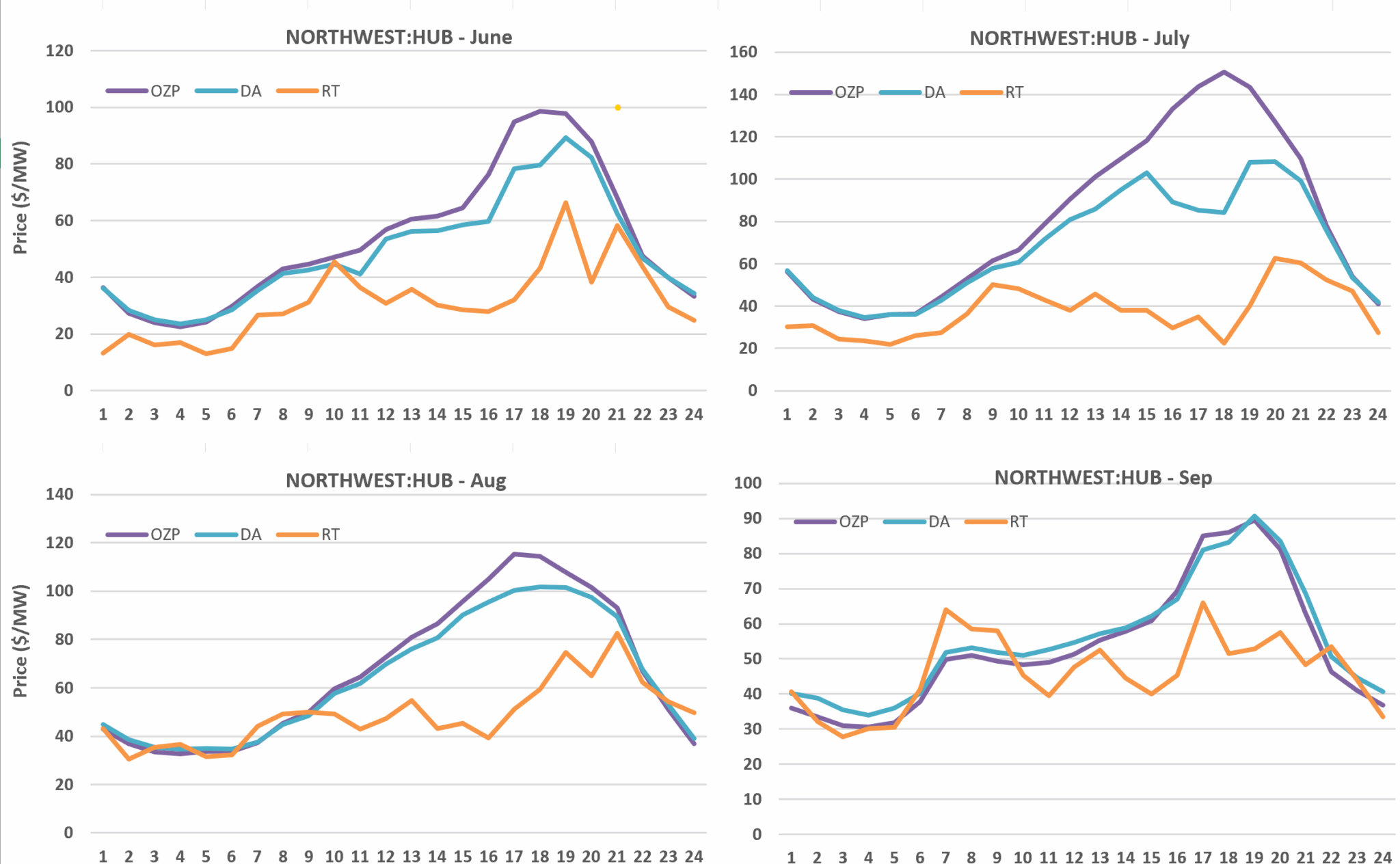
Fig. 1. Average OZP, DA, and RT prices for the Northwest Hub
Table 1: Maximum 4-month savings by participating in the DA/RT market

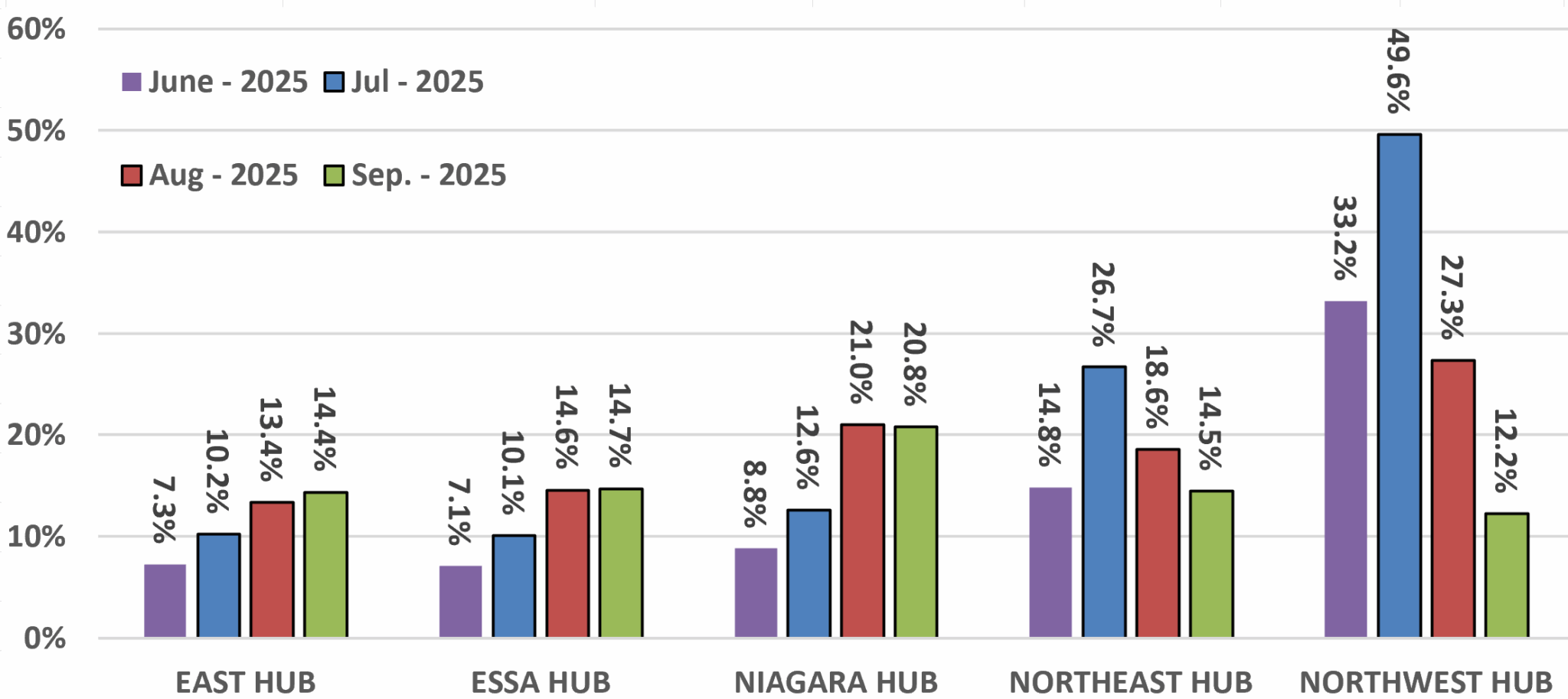
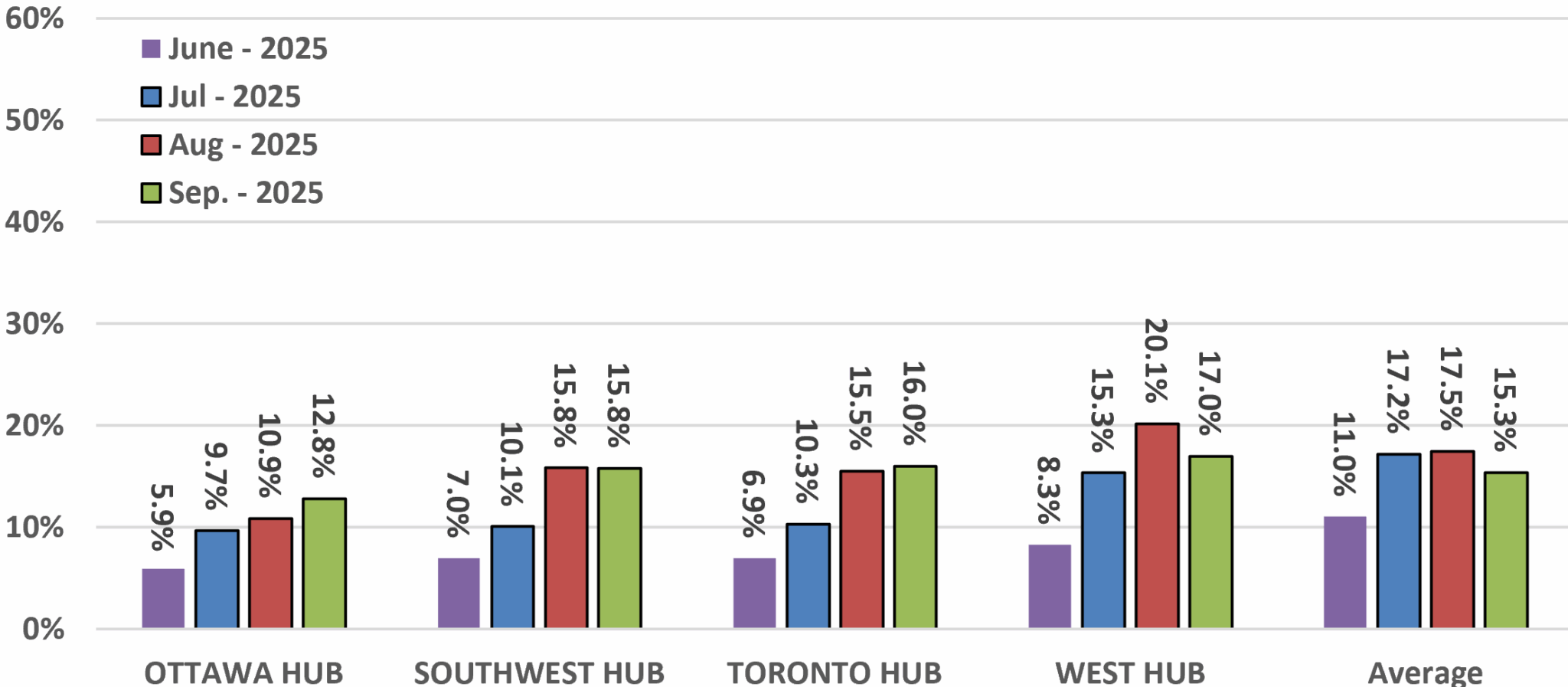
Fig. 2. Maximum potential electricity cost savings across Ontario zones
How Can We Mine the Gold?
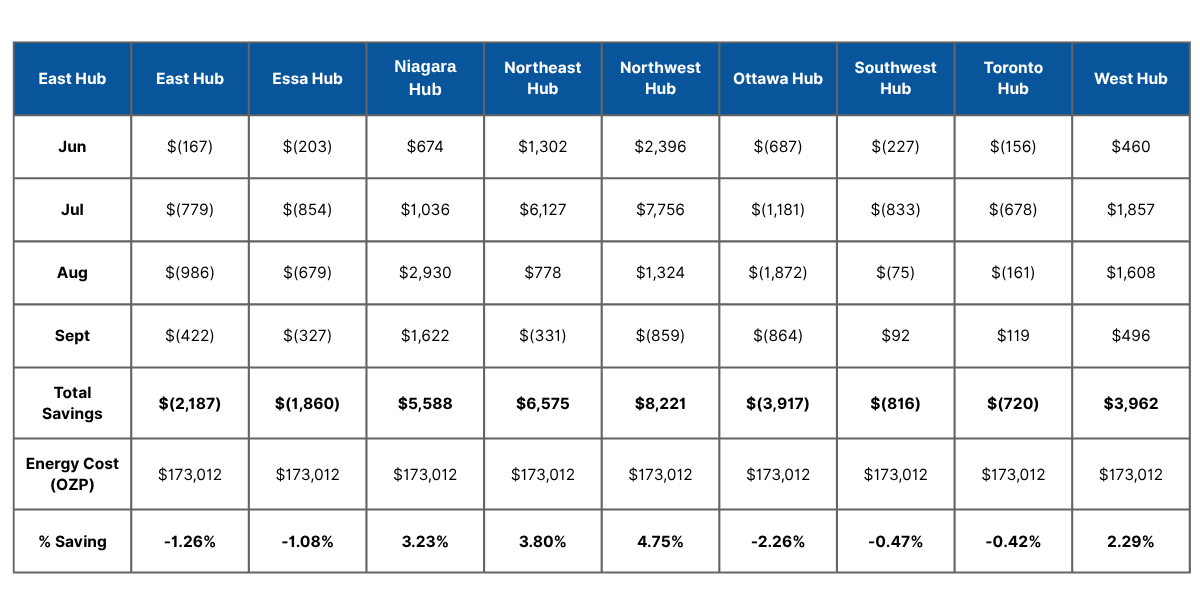
Table 2 shows the percentage of savings for customers who enroll in the market and only participate in the Day-Ahead market without arbitrage. Customers in the Niagara, Northeast, Northwest, and West hubs can achieve 2.26% – 4.75% savings this way.
However, comparing these numbers to those in Fig. 2 shows that participating in DA-only offers limited, low-risk savings. The most significant cost reductions come from arbitrage between DA and RT markets.
How Edgecom Energy Helps You Mine Gold
As noted, there are two main approaches to benefit from this market:
- Leverage lower DA prices in Niagara, Northeast, Northwest, and West regions.
- Capitalize on DA–RT price differences through strategic arbitrage.
Table 2. Savings per MW from participating only in the DA market (no arbitrage)
Edgecom Energy is positioned to help customers “mine gold” in Ontario’s Market Renewal Program by engaging in energy trading (buying and selling electricity strategically across markets) and customer services. With customer services, Edgecom can help its clients purchase electricity directly from the market to benefit from price differentials.
This opportunity is particularly promising in the Northwest, Northeast, Niagara, and West hubs. To capitalize on it, we recommend the following:
- Conducting market research and offering tailored services based on client interest.
- Investing in price prediction tools and shadow trading.
- Engaging with customers in high-potential areas to present opportunities.
Ontario’s Market Renewal Program is changing how energy is bought and sold and Edgecom Energy is here to help you stay ahead.
Ready to find your savings potential? Contact Us Today.